 4 min read

Photo by Sasun Bughdaryan on Unsplach
What Do You Need Your Content to Do?
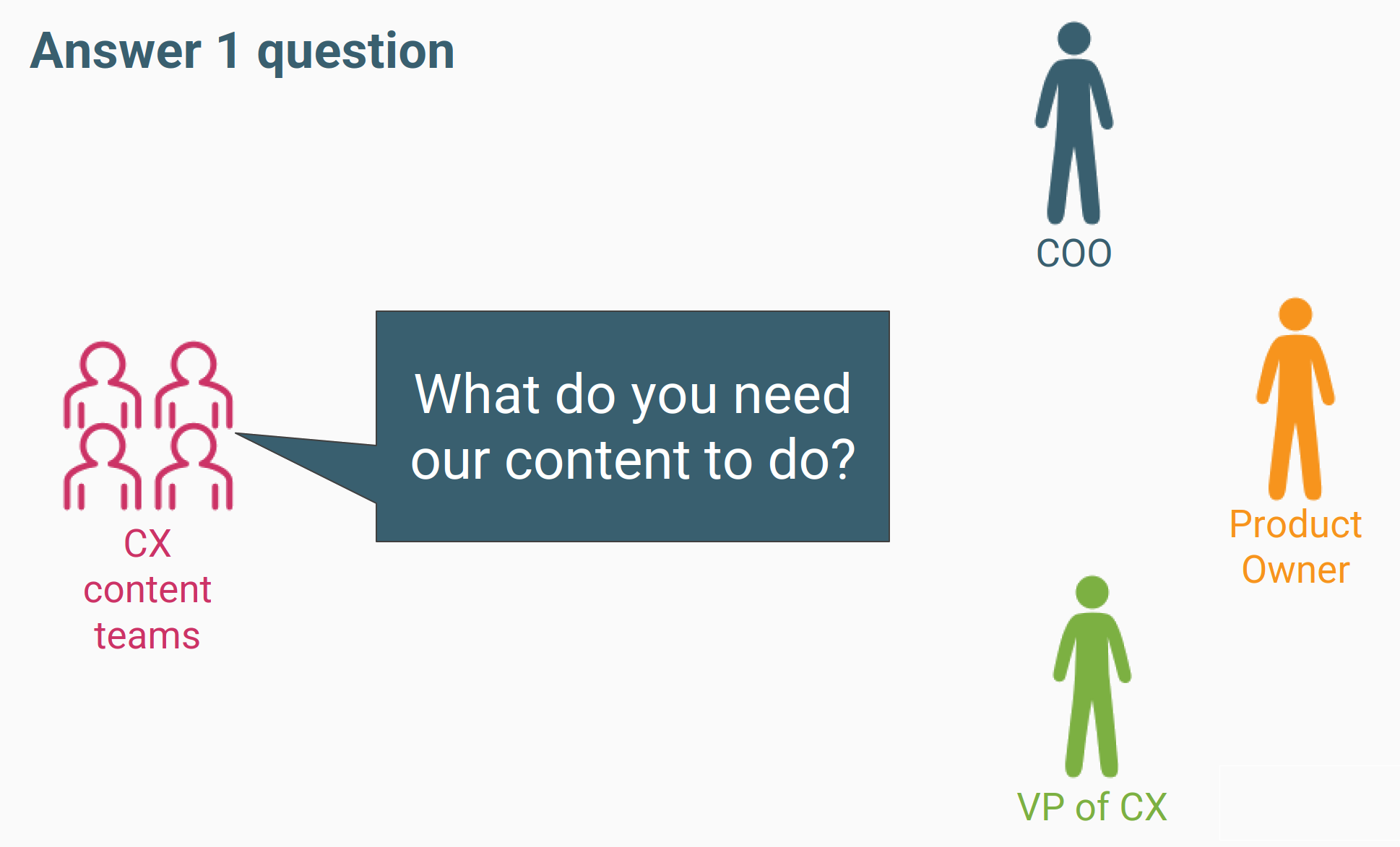
Most documentation teams are measured on output, not business outcomes. Your technical writers are looking to you to answer one question. Can you?
Key Takeaways
- Output is not value. Pages published and tickets closed show activity, not business impact.
- Documentation reaches buyers before sales does. Prospects use self-service content to decide whether a product can meet their needs, making documentation part of the buying journey, not just post-sales support.
- Direction has to precede delivery. Define what success looks like along with its business goal.
- A KPI must support a decision. Different teams have different KPIs tailored to what’s important to their roles.
When executives can’t articulate what they need content to accomplish, there’s no documentation strategy, just individual contributors optimizing to how they’re measured and their paycheck: topics written and tickets closed.
Why documentation teams optimize for the wrong metrics
Revenue is the number one priority that drives decisions for business leaders. For technical documentation teams, it ranks dead last. What is that?
It happens because the writers don’t know what business value they were supposed to produce with their content. And when that direction is missing, writers do exactly what you’d expect: they optimize for what gets measured. Number of closed tickets or pages written or their sprint velocity. If they do that well, they’ll get their bonus. It is not a failure of the writers. Nobody can clearly articulate “What do you need your content to do?”
So the content gets thrown over the wall. Everyone moves on to the next task.
Self-service documentation and buyer behavior
Writers see their own work as post-sales content. That view needs to change, for writers and leadership alike. This doesn’t mean documentation should look like marketing pages. Just the opposite: buyers trust documentation because it’s perceived to be free of sales intent.
Your documentation gets the first, unmediated shot at every skeptical buyer.
In software specifically, 67% of buyers’ first meaningful product interaction is self-service (help portals, knowledge bases, documentation sites) before making a buying decision. Twenty percent of those sessions are prospective buyers doing pre-purchase technical due diligence.
When your content fails to answer “can this product do what I need it to do?”, the prospect takes longer to decide or abandons and goes to a competitor.
Every year at planning time, budget reviews don’t ask what you produced. They care about ROI: what it was worth. Does the output justify the headcount? Eventually you’re the one hearing the question every manager dreads, like in Office Space: “What would you say you do here?”
Four steps to improve documentation ROI
Executives want to increase revenue, brand loyalty, and scope. These improve the business’s market attractiveness. On the expense side, competitiveness improves by managing risk and increasing efficiency. Both paths lead to the same place: profit. These are how business leaders choose to invest.
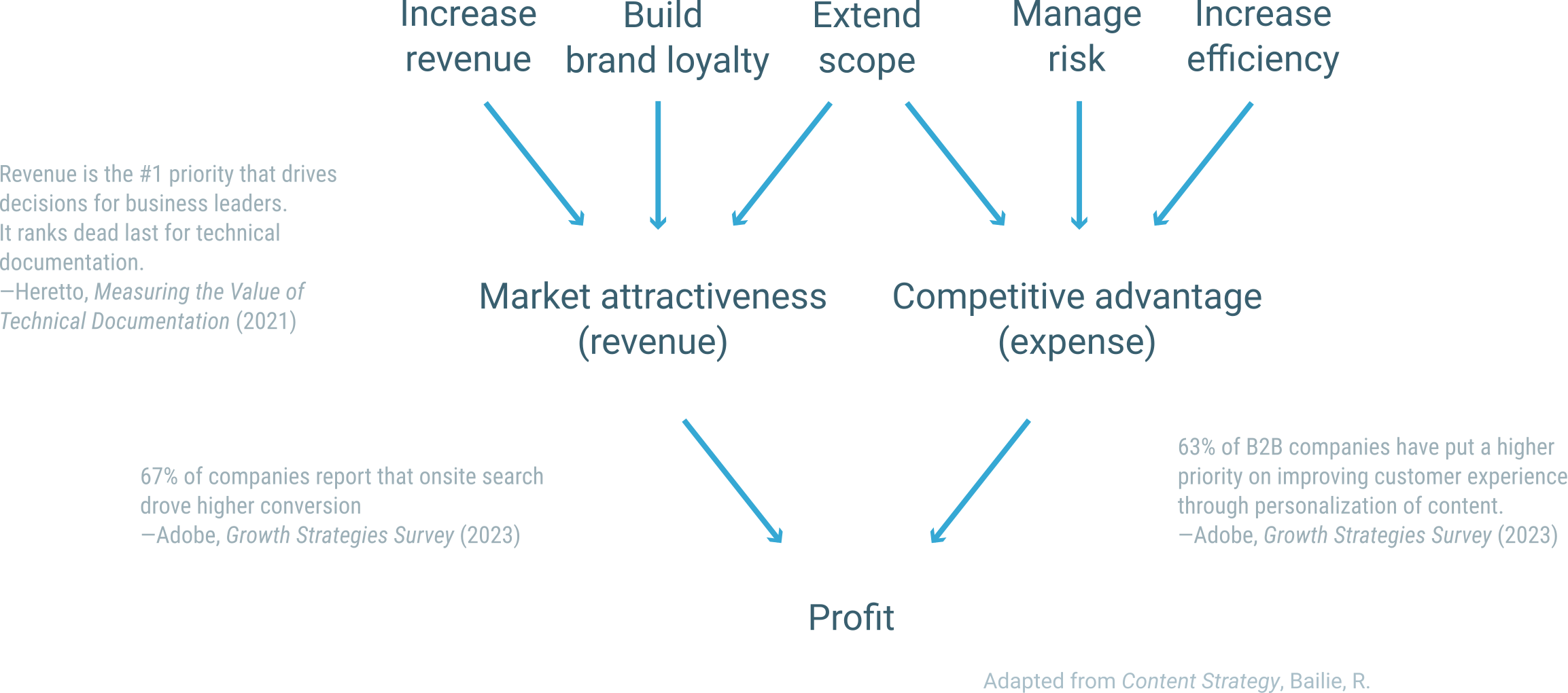
Every documentation task should trace to at least one before writing starts.
You need to know whether the content serves growth, reduces support costs, or both. That’s the strategic value of content.
Before the next planning cycle, get these four things right in your technical documentation strategy.
Identify the business goal the content is supposed to serve. Be specific. “We have to have it” is not a business goal. “This onboarding guide reduces time-to-first-value for new users, because time-to-first-value correlates with 90-day retention” is.
Define how you’ll measure documentation success before the work starts, not after. Meghan Casey’s Content Strategy Toolkit has a MadLibs-style exercise for this:
Our content will help [audience] accomplish [goal] by providing [content type] that
[differentiator]. We will know we've succeeded when [measurable outcome].
Have your stakeholders complete it for each project. If they fill in different words, excellent. That disagreement is the point. It surfaces misalignment that would otherwise show up months later.
Metrics vs. KPIs. Metrics are raw measurements: page views, session counts, topics published. They’re useful as inputs, not decisions. A KPI is different: it has a threshold, triggers a decision, and is calibrated for the stakeholder who has to act on it. So different teams have different documentation KPIs. The KPI for a VP of Support might be deflection rate and net savings; page views tell that executive nothing actionable. The right KPI for a VP of Sales isn’t the same as for a compliance officer or a localization manager. A single dashboard serves no one well.
Give writers a story, not just a backlog. After the business goal and success criteria are set, tell writers what the work is actually for. Let them see the connection to business outcomes and how their work matters elsewhere in the business.
References
- (2024). State of Customer Self-Service Report 2024. Heretto.
- Meghan Casey. (2015). The Content Strategy Toolkit.
- Rahel Anne Bailie. (2019). The Five Pillar Approach to a Content Strategy Gap Analysis.